
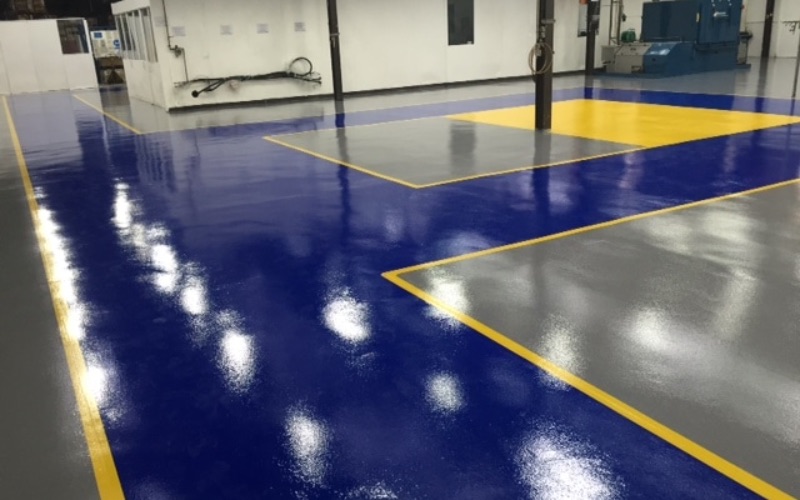
In industrial environments, factory flooring is far more than a surface. It is the foundation that supports efficiency, safeguards workers, and ensures long-term cost savings. The flooring beneath a facility’s operations must be capable of handling heavy machinery, forklift traffic, chemical spills, and relentless footfall, all while requiring minimal maintenance. Choosing the right system directly influences productivity, safety, and overall durability.
What Factory Flooring Must Withstand
Heavy Loads & Mechanical Stress
Factories are dynamic spaces where pallets, machinery, and storage racks exert enormous weight on the floor. Vibrations from operating equipment and impacts from dropped tools add to the burden. Flooring that cracks, chips, or warps under pressure disrupts operations and demands expensive repairs. A robust solution must remain stable and resilient in the face of constant strain.
Chemicals, Oil, Moisture, and Spill Resistance
Industrial floors are frequently exposed to corrosive elements such as oils, solvents, acids, and alkalis. Spills can rapidly degrade inferior flooring, leading to pitting or staining. Moisture intrusion compounds the issue, weakening the substrate and undermining the surface layer. Factory flooring must therefore be impermeable, chemically resistant, and easy to clean, ensuring that spills do not turn into hazards or costly damage.
Thermal & Environmental Changes
Many factories operate with furnaces, boilers, or outdoor sections subject to extreme weather. Sudden temperature swings, humidity fluctuations, and cycles of wet and dry conditions can wreak havoc on standard flooring systems. Inferior materials expand and contract, eventually cracking or delaminating. A suitable flooring system must endure environmental stresses without losing performance or structural integrity.
Safety & Slip Resistance
Worker safety hinges on a stable and slip-resistant surface. Slips, trips, and falls account for countless industrial accidents each year. Flooring must incorporate textured coatings, embedded aggregates, or specialized non-slip additives. Clear pathways, color-coded zones, and detectable warning strips further protect employees from harm in hazardous areas.
Minimal Downtime & Maintenance Requirements
Every hour a production floor is closed translates into lost revenue. For this reason, factory flooring must be quick to install, fast-curing, and straightforward to maintain. The ideal system allows for cleaning and repairs without halting operations for extended periods. Durability and ease of upkeep keep downtime at a minimum.
Epoxy Flooring Systems: A Strong Match for Factory Flooring
Epoxy flooring has become one of the most trusted solutions for industrial facilities. Its combination of durability, versatility, and aesthetic options positions it as a leading choice for factory flooring.
Seamless and Non-Porous Surfaces
Epoxy systems create a continuous, joint-free surface that prevents liquids, bacteria, and contaminants from seeping into cracks. This seamless quality enhances hygiene and reduces the likelihood of damage beneath the surface.
Exceptional Chemical & Abrasion Resistance
Factories that handle oils, solvents, or corrosive chemicals benefit from epoxy’s natural resistance to these substances. The coatings shield against chemical attack while also resisting abrasion from constant traffic, carts, and machinery.
Durability Under Heavy Traffic
Forklifts, pallet jacks, and loaded equipment test the strength of any surface. Epoxy flooring endures this traffic without buckling or wearing thin. It maintains structural integrity under conditions that would quickly degrade bare concrete.
Fast Return to Service
Time is money in manufacturing. Many epoxy systems are designed with rapid curing properties, allowing areas to return to service in as little as a day. This minimizes costly interruptions and keeps production schedules intact.
Design Flexibility & Safety Zones
Beyond function, epoxy offers design adaptability. Facility managers can incorporate color zones, directional markings, and safety stripes directly into the flooring. Non-slip textures and even branded graphics add both safety and identity to the workplace.
Key Considerations When Choosing Factory Flooring
Substrate Preparation
Even the strongest epoxy will fail if applied over a compromised surface. Proper preparation—through grinding, shot-blasting, and repairing cracks—is non-negotiable. A clean, profiled substrate ensures maximum adhesion and long-term performance.
Thickness & Build-Up
Not all epoxy floors are created equal. Systems range from thin coatings to thick mortars. Facilities with heavy traffic or mechanical stress require thicker applications to provide lasting protection and structural support.
Chemical & Thermal Conditions in Your Factory
The flooring system must be compatible with the specific environment. Exposure to harsh chemicals, high heat, or constant UV radiation calls for specialized resins or protective topcoats. Urethane may be preferable in settings with extreme thermal demands, while epoxy shines in controlled conditions.
Slip Resistance & Safety Features
Factories with wet or oily zones must prioritize traction. Non-slip aggregates, textured topcoats, and color-contrasted pathways improve grip and enhance safety. Well-planned floor design reduces accidents and clarifies traffic flow.
Maintenance Plan & Lifecycle Cost
Beyond installation, the lifecycle cost of flooring should guide decision-making. A properly installed epoxy floor may last a decade or more with minimal maintenance. Reduced repair expenses, fewer shutdowns, and improved safety yield long-term savings far greater than the initial outlay.
Common Factory Flooring Problems & How to Avoid Them
Moisture Vapor Emission
If underlying concrete releases moisture, epoxy coatings can blister or delaminate. Moisture control membranes or vapor barriers prevent this common failure.
Poor Surface Prep
Skipping preparation steps leads to poor adhesion. Old coatings, oils, or residues left on the surface compromise bonding and shorten the floor’s lifespan.
Wrong Resin Type
Choosing a resin unsuited for the environment invites early failure. UV exposure, high heat, or harsh chemicals demand resins specifically engineered for those conditions.
Lack of Safety Considerations
A glossy surface without slip resistance is a hazard. Incorporating traction-enhancing additives is essential in wet or spill-prone areas.
Neglecting Recoating
Even the strongest epoxy wears with time. Regular inspections and timely recoating preserve the protective layers and extend the service life of the flooring.
Case Study: Factory Flooring in Real Life
A midwestern automotive parts manufacturer faced constant issues with cracked concrete in its loading bay. Forklift traffic, oil spills, and fluctuating temperatures took their toll. The company opted for a 250 mil epoxy mortar system.
The installation included non-slip additives, color-coded safety pathways separating forklift and pedestrian traffic, and a fast-curing formula to limit downtime.
Results were remarkable:
- Zero flooring-related stoppages in the first two years
- A 40% reduction in slip-related incidents
- Cleaning times shortened by nearly 30%
- Long-term savings outweighed the installation cost within three years
Why Epoxy Schaumburg Should Be Your Factory Flooring Partner
- Expertise in high-performance epoxy floor systems customized for industrial needs
- Commitment to proper preparation, precise thickness, and safety-enhancing finishes
- Ability to deliver fast-curing, chemical-resistant flooring that minimizes downtime
- Local presence in Schaumburg ensures compliance, faster service, and climate-ready solutions
Factory flooring is more than a structural necessity—it is a pivotal factor in safety, efficiency, and operational performance. Epoxy systems, when selected and installed with precision, provide unmatched durability, chemical resistance, and safety benefits. With the right flooring partner and a proactive maintenance plan, factory floors become an enduring asset rather than a recurring expense.
For operations looking to safeguard productivity and protect workers, investing in epoxy factory flooring is a decision that yields dividends for years to come.