
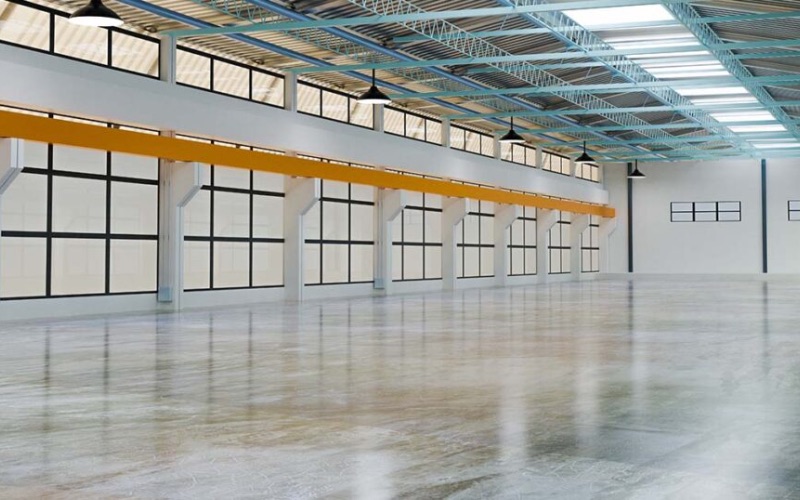
The success of an industrial operation often rests on what lies beneath the machinery, workers, and products. Flooring in factories, warehouses, and plants is not just a backdrop—it is a fundamental element of efficiency and safety. A weak or inadequate surface can slow operations, increase hazards, and drive up long-term costs. Conversely, strong, well-designed flooring supports productivity, enhances safety, and reduces downtime.
Industrial floors face unique demands: the rumble of forklifts, the pressure of machinery, chemical spills, and constant wear from foot traffic. Ordinary concrete, while sturdy, often falters under these extreme conditions. Over time, cracks, chips, and stains compromise both aesthetics and performance. In contrast, epoxy has emerged as the gold standard in industrial flooring. Its seamless design, durability, and adaptability have made it indispensable in modern facilities seeking reliability and long-term value.
What is Industrial Epoxy Flooring?
Definition and Composition of Epoxy Flooring Systems
Industrial epoxy flooring is a high-performance surface created by combining resin and hardener. When mixed, these components chemically bond to form a rigid plastic material that adheres tightly to prepared concrete. The result is a smooth, resilient surface capable of withstanding extreme stress.
How Resin and Hardener Create a Durable, Bonded Surface
The magic lies in the chemistry. As resin and hardener cure, they form a thermoset polymer with exceptional compressive strength. Unlike surface paints or simple sealers, epoxy penetrates and bonds with the substrate, ensuring both adhesion and durability. This chemical reaction creates a finish that is not only tough but also resistant to many of the common threats faced in industrial environments.
Comparison with Untreated Concrete and Alternative Flooring Materials
Untreated concrete is porous, vulnerable to staining, and prone to cracking under heavy stress. Alternative options like vinyl tiles or rubber mats may address certain needs but often fall short in longevity and resilience. Epoxy stands apart by combining the structural strength of concrete with a protective, customizable layer that dramatically extends the floor’s lifespan.
Key Benefits of Industrial Epoxy Flooring
Durability and Heavy Load Resistance
Factories and warehouses demand flooring that can handle extreme pressure. Epoxy is designed to endure the constant weight of trucks, forklifts, storage racks, and heavy machinery. Unlike untreated concrete, which can crumble or fracture, epoxy flooring resists deformation and impact, preserving structural integrity for years.
Chemical and Spill Resistance
Industrial spaces frequently deal with oils, solvents, acids, and other corrosive materials. Epoxy creates a non-porous barrier that protects against chemical infiltration. Spills can be wiped away without leaving stains or compromising the surface. This resilience makes epoxy an invaluable choice for plants where chemicals are part of daily operations.
Safety and Compliance
Workplace safety regulations demand surfaces that reduce risks. Epoxy coatings can be tailored with non-slip additives to enhance traction. Color coding and line markings can be incorporated directly into the floor, helping designate pathways, hazard zones, and work areas. These features not only protect workers but also align with OSHA and other safety requirements.
Low Maintenance and Longevity
Epoxy’s smooth surface simplifies maintenance. Daily cleaning requires little more than sweeping and mopping, while periodic resealing extends its protective qualities. Because epoxy lasts longer and requires fewer repairs, facilities benefit from lower lifecycle costs compared to other flooring options.
Common Applications of Industrial Epoxy Flooring
Manufacturing Plants
From assembly lines to processing equipment, manufacturing facilities demand flooring that withstands heavy machinery and chemical exposure. Epoxy delivers both strength and chemical resistance, ensuring safe and efficient operations.
Warehouses and Distribution Centers
High-traffic environments with forklifts and pallet jacks require a floor that resists abrasion and impact. Epoxy flooring provides a seamless surface that endures constant movement while supporting heavy loads.
Food and Beverage Facilities
Hygiene is paramount in food production. Epoxy offers a seamless, non-porous surface that prevents bacterial growth and complies with FDA and USDA standards. Its resistance to spills and ease of cleaning make it ideal for food and beverage operations.
Automotive and Aerospace Industries
Oil, grease, and fuel can wreak havoc on untreated floors. Epoxy resists these substances while providing durability under heavy mechanical equipment. Its impact tolerance makes it a perfect fit for industries where both strength and cleanliness are vital.
Design and Customization Options
High-Gloss Finishes to Brighten Large Facilities
Epoxy can be finished with a reflective, high-gloss coating. This enhances lighting within vast industrial spaces, improving visibility and reducing energy costs.
Color Zones for Workflow and Safety Pathways
Safety is reinforced through visual guidance. Color-coded epoxy zones help designate walkways, restricted areas, or equipment zones. This not only streamlines workflow but also reduces risks of accidents.
Decorative Flakes or Metallic Finishes for Showrooms
Industrial spaces that welcome customers or clients can combine function with style. Decorative flakes or metallic finishes add visual appeal while retaining the durability and performance epoxy provides.
Installation Process of Industrial Epoxy Flooring
Importance of Surface Preparation
Successful installation begins with preparation. Concrete must be thoroughly cleaned, cracks repaired, and in many cases, the surface mechanically profiled through grinding or shot-blasting. This ensures the epoxy bonds securely, preventing peeling or delamination.
Application Techniques for Multi-Layer Systems
Industrial epoxy systems often include multiple layers—primer, base coats, and topcoats. Each layer contributes to strength, adhesion, and chemical resistance. Depending on the facility’s needs, installers may also add non-slip aggregates or specialty finishes.
Curing Times and Minimizing Downtime
Epoxy requires curing to achieve maximum strength. While this can take several days, fast-curing formulations are available to reduce downtime. Facilities benefit from carefully planned installations that balance curing needs with operational schedules.
Maintenance and Best Practices
Daily Cleaning and Upkeep
Routine maintenance is straightforward. Sweeping prevents debris buildup, while non-abrasive mopping maintains surface shine. This daily care preserves both appearance and function.
Periodic Resealing or Recoating
Even durable floors require upkeep over time. Recoating with a fresh layer of epoxy every few years refreshes protective qualities, restores gloss, and extends the floor’s service life.
Avoiding Common Mistakes
The longevity of epoxy flooring depends on proper care. Harsh chemicals not rated for epoxy, neglecting cleaning, or dragging heavy equipment across the floor can prematurely degrade the surface. Preventing these errors ensures decades of reliable performance.
Why Choose Epoxy Schaumburg for Industrial Epoxy Flooring
Epoxy Schaumburg has built a reputation for excellence in industrial flooring. The team brings proven expertise in installing epoxy systems tailored to demanding environments. With meticulous preparation, correct thickness build-ups, and attention to safety, installations deliver long-term results. Local knowledge ensures compliance with regional regulations and climate considerations, while a focus on minimizing downtime keeps factories running efficiently.
Building Strong Foundations with Industrial Epoxy Flooring
Industrial epoxy flooring is more than a protective surface—it is a strategic investment in efficiency, safety, and longevity. Its durability under heavy loads, resistance to chemicals, and design adaptability make it the trusted choice for modern factories, warehouses, and plants. With the right partner, facilities can secure flooring that not only supports operations but also strengthens them for years to come.
For facility managers ready to enhance safety and performance, epoxy flooring offers a strong foundation on which to build lasting success. Leztruvin